Showing posts with label Tokyo Girls Bravo. Show all posts

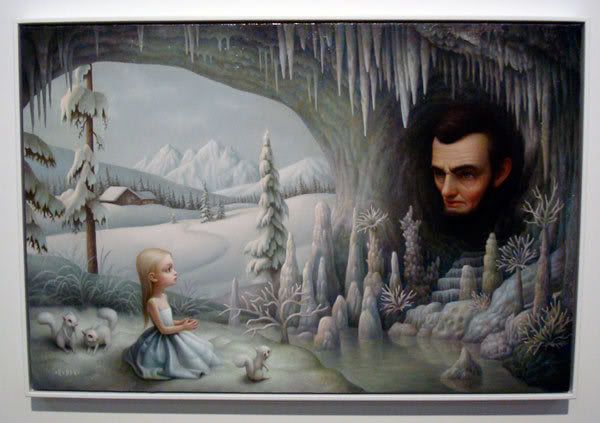
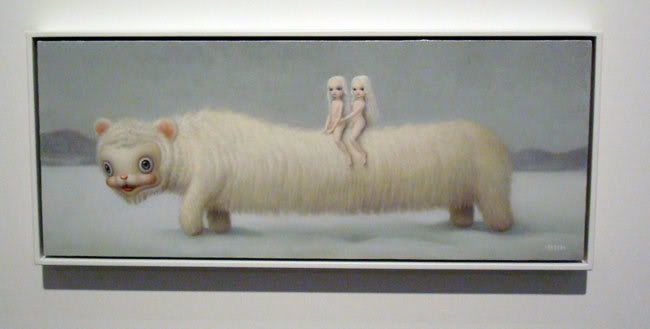
Mark Ryden : The Snow Yak


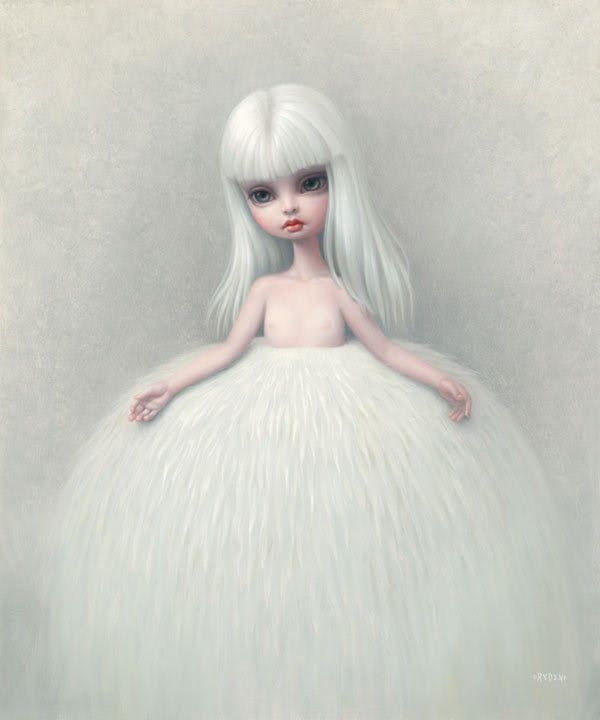
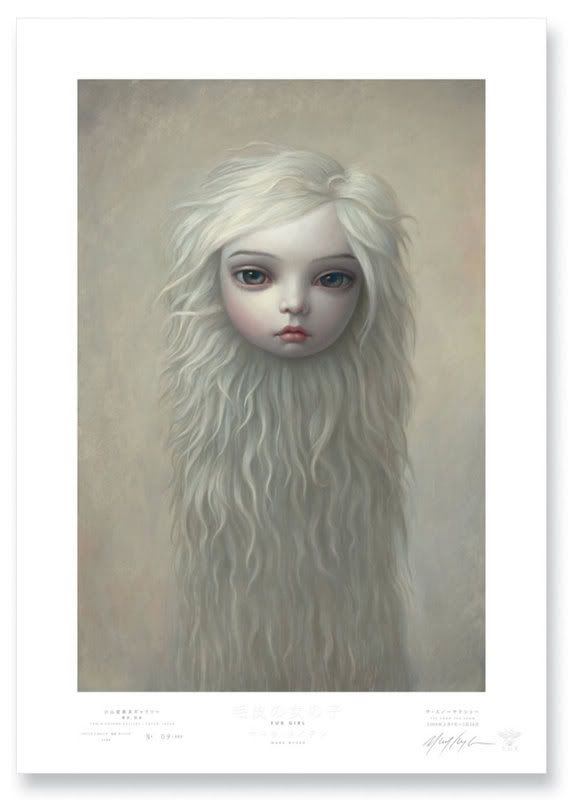
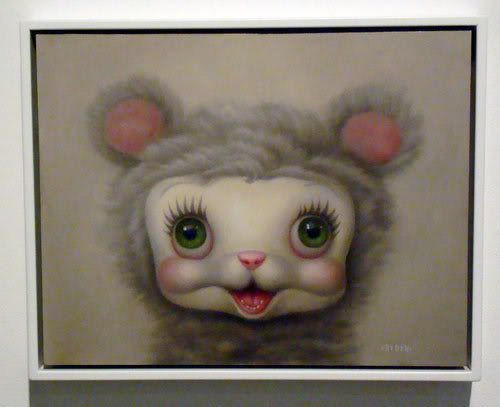
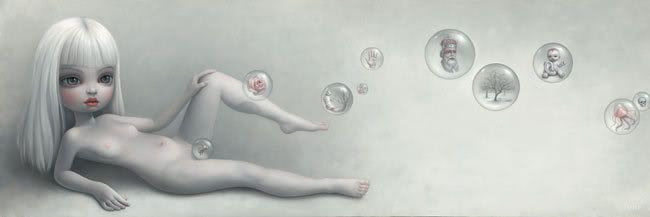
The new show by Mark Ryden, "The Snow Yak" is currently on display at the Tomio Koyama Gallery in Tokyo. The pieces are breathtakingly beautiful. I've seen quite a few Ryden shows and they keep managing to get more and more stunning. The white backdrop on these pieces only adds to the subtle yet supremely perfect details in each piece. The wonderful Hi-Fructose has a great set of photos from the opening. Click 'Read More' for additional images.


Images are from the Hi Fructose post of the show opening.


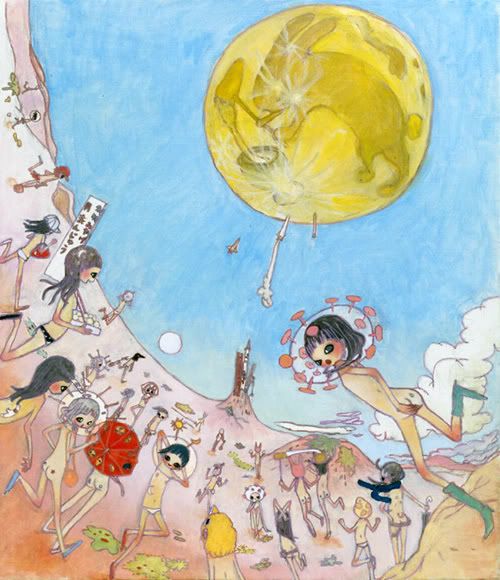
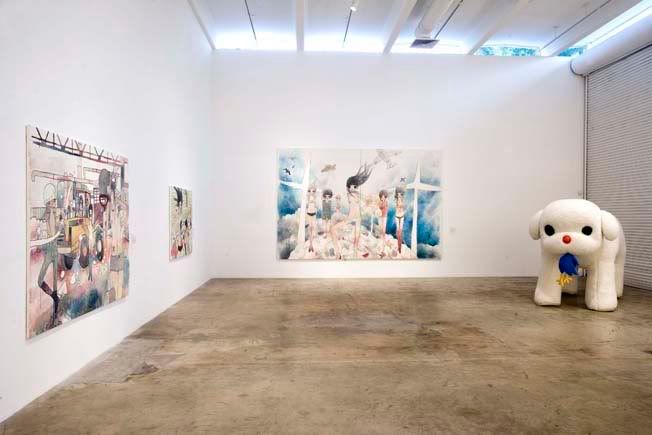
Aya Takano 'Wild dogs, hawks, owls, cats, a landfill the size of 44 and a half Tokyo Domes, the stratosphere'


Feb. 10, 2007 – April 7, 2007
Gallery Emmanuel Perrotin Miami
Aya Takano's solo show in Miami is based upon the artitst's trip to a trash disposal plant.
From the KaiKai Kikii site:
The story: One day Aya Takano noticed a strange windmill outside her studio in the Tokyo Bay Area. She found there a waste disposal plant built on a landfill. From this spectacular sight came tales of girls and animals born and raised in a world buried in trash. The story of these mysterious lanky girls and their symbiotic co-existence with these new bird- and dog-like life forms touched the hearts of the denizens of Miami, a city perpetually sinking from global warming.

Aya Takano: There is a Science Fiction author, James Tiptree, Jr. whom I like. In one of her unfinished long works, I remember a scene where children born without hands or feet (the result of radiation from a nuclear bomb or something) cooperate with each other to drive a large car in their departure to somewhere. Also, there is a really wonderful Japanese comic book called Nausicaa, where the atmosphere has become poisonous--deadly to a person of this world--as the result of a large war. Both of these stories portray poisonous environments, but ones in which life continues.

When I shared my experiences at the waste site with people around me, I was told me that in some landfills, plants grow that have adapted to poison. It reminded me of how insects adapt to withstand pesticide. I heard that billions of years ago, most creatures on Earth were extremely sensitive to oxygen. As oxygen increased on the planet, many of them died off. One atmosphere might be unsurvivable for one creature, yet optimum for another. I also hear that there is life on the inside of deepsea volcanoes, the inside of clay, and other places where we previously thought it could not exist. I thought that the children who might be born sometime on this waste site, who might seem like mutants to us, are Venuses of this new world. I consider them beautiful.

To get rid of trash, no matter what we do, as long as we live on this planet, and as long as the systems we have continue to be effective, will not be possible. In the Edo Period (over 100 years in the past), in Japan there was a perfect waste ecosystem, including human excretions, but there is no way to go back to that now. Vinyl and plastic do not decompose, even after hundreds of years. If children are born amongst the mountains of plastic and vinyl left by us and the generations before us, they might look at these mountains and find them beautiful. Well, at least, I think they are beautiful. It is the same as how I think that artificial buildings and lights are beautiful.

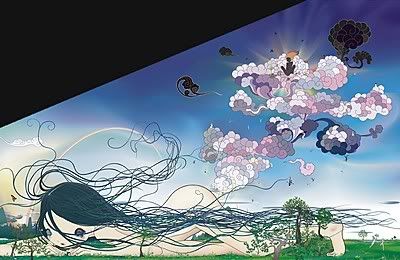
The Divine Gas by Chiho Aoshima


My desire to visit Boston grows daily:
The Divine Gas, Aoshima's work for the ICA, depicts a giant girl lying in a lush landscape. The setting seems idyllic and serene-butterflies flutter, a deer nestles near her foot, a couple frolics hand-in-hand. Meanwhile, a billowing cloudscape, lorded over by a genie creature, emerges from her bottom. A few figures sit nestled in the clouds, while others tumble toward the ground. Like an updated version of Hieronymus Bosch's Garden of Earthly Delights (c. 1500), the mural is mysterious tale of good and evil. An elegant and energetic fusion of opposing forces—beauty and darkness, the natural and supernatural, humor and earnestness—The Divine Gas invites viewers into Aoshima's fantastical daydream.

:( Chinatsu Ban :(


I haven't posted in a while, and this slighty due to the fact that I am heartbroken over not seeing the upcoming Chinatsu Ban show in Fort Worth, Texas. If anyone is going, or knows someone who is going, I must see photos! I tried and tried to make it work out, but it was just too pricey! Anyway... I hope it's a huge success, and I am sending my love to her elephants from LA.

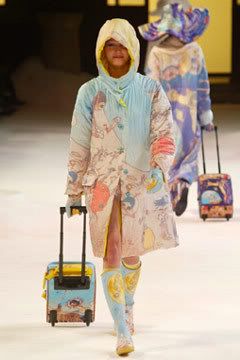
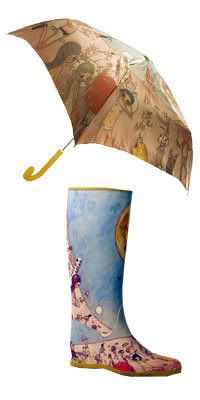
Better late than never: Aya Takano for Issey Miyake


It sucks when you find out about something totally-incredibly-amazing way too late. It's just how I felt this week when I discovered that LAST YEAR Issey Miyake hired Aya Takano to design a line of rain wear. Of course, it's the cutest clothing in the whole world. The boots are amazing... and how great does that runway model look? Completely decked out in head-to-toe Takano- the best way to travel in the rain!

CHINATSU BAN!!!!!!!


EEEEEEEEEEEEEEEEEEEEEEE!!!! I'm saving my pennies for a plane ticket to Fort Worth.


The Modern Art Museum, Fort Worth, TX
FOCUS: Chinatsu Ban
December 3, 2006–January 28, 2007

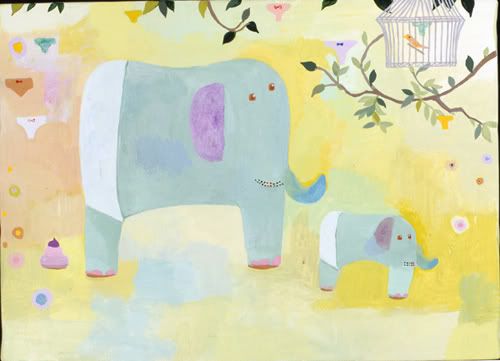
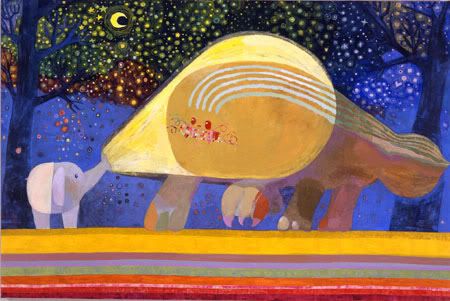
Chinatsu Ban's most common motif is the elephant, which symbolizes a number of things to the artist, including safety and salvation. In 2005 Ban was included in the major exhibition Little Boy, hosted by the Japan Society Gallery and organized by the important Japanese artist Takashi Murakami. With Little Boy, Murakami explored the phenomenon known as otaku, which, now globalized, began as a Japanese youth subculture fixated on science fiction; fantasy; video games; comic books, known as manga; and animation, known as anime.

A young artist among those who explore otaku, Ban was born in 1973 and lives and works in Tokyo, Japan. She has been making art since 1997, and has continued to develop her unique aesthetic style, creating both paintings and sculpture of irresistibly cute figures, including generically rendered elephants with no mouths, in bright colors and often wearing girls' undergarments. While there is a definite personal and psychological edge to Ban's work, her paintings and sculpture undeniably operate within the realm of kawaii, the Japanese word for cute, which is also seen in such popular figures as Hello Kitty. FOCUS: Chinatsu Ban is the artist's first solo museum exhibition.

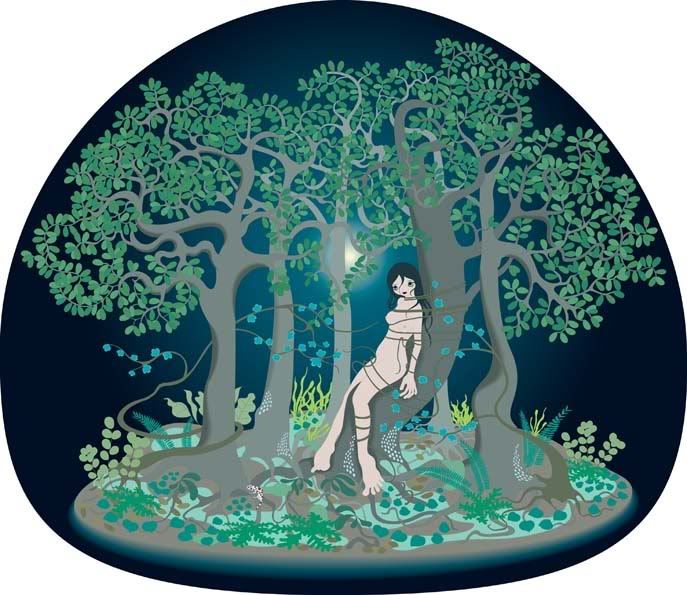
Chiho Aoshima


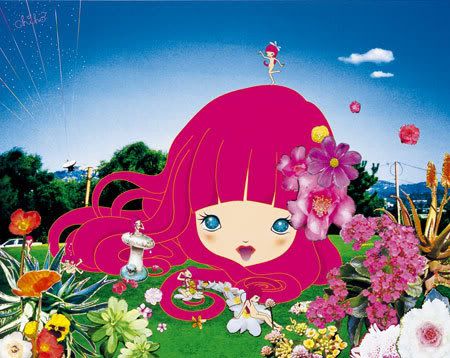
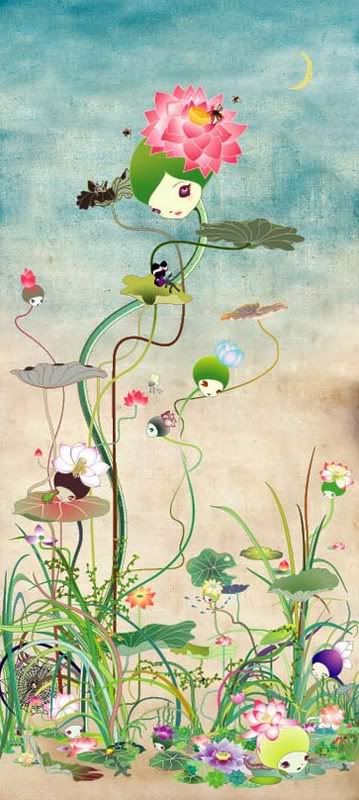
KaiKai Kiki is home to my most favorite artists, including Chinatsu Ban, Aya Takano, Takashi Murakami, and Chiho Aoshima. Here are some pieces by Chiho Aoshima; who always inspires me with her imagery of nature, the cycle of life, and meaning of earth. Looking at her work makes me feel as though her imagination has flown through space, delved into the depths of the earth, spoken with the trees, lived among the reptiles, and then returned to inspire her hand to draw.